
Does Social Media Marketing Actually Work for Local Businesses?
Honest answer: yes for awareness and trust, no for direct lead generation in most cases. What social media can and can't do for CT small businesses.
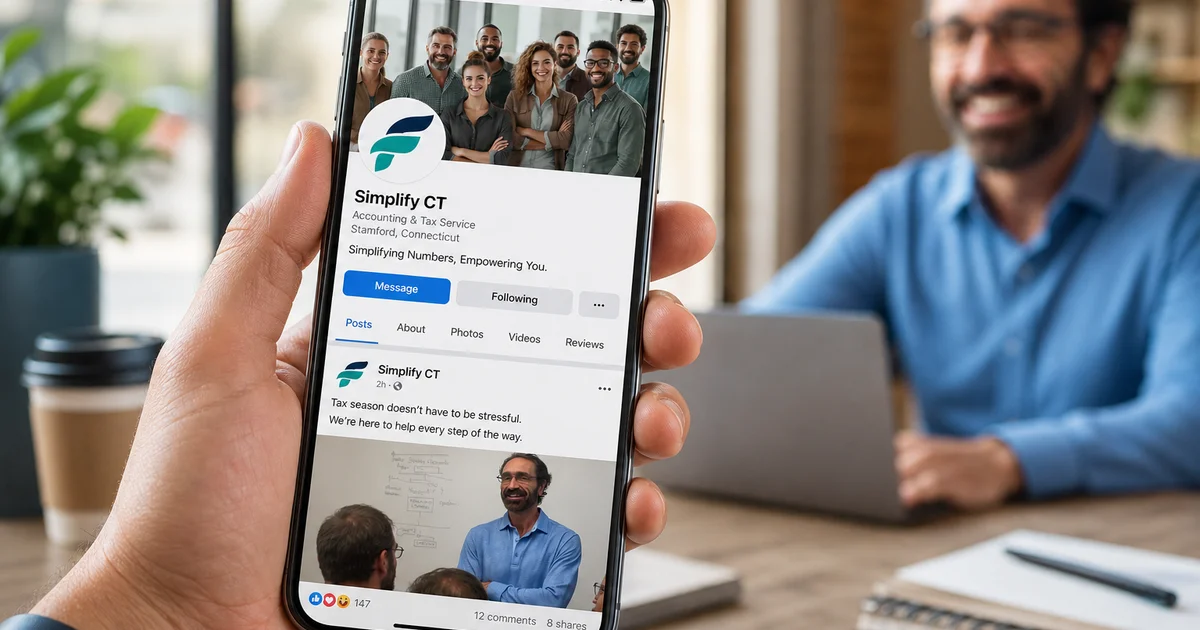
As a professional service team, we hear the same frustration every week from owners trying to crack the digital marketing code. You are probably wondering, does social media marketing work for local business? The honest answer is that it is incredibly effective for some US locations, yet a complete drain of resources for others.
We have seen exactly how easy it is to throw money at these platforms without seeing a single new customer walk through the door. The data backs this up, with a 2026 HubSpot report revealing that 52% of small business owners still cannot measure their returns.
Let us break down what these channels actually do, where they fail, and how to make a smart investment.
What Social Media Genuinely Does Well
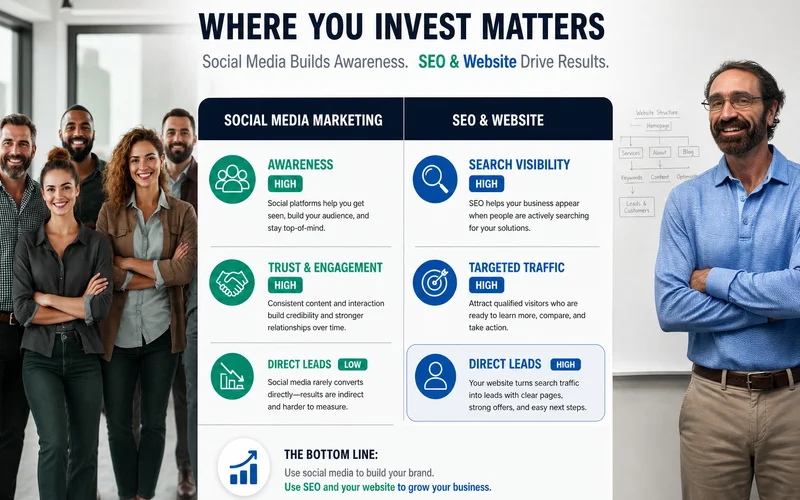
Social media excels at building brand awareness, establishing trust, and fostering community relationships over time. It creates a digital storefront that keeps your local business top of mind.
1. Brand awareness over time. Consistent posting builds recognition. When someone sees your business name three times before searching for it, they are far more likely to click your result. 2. Trust building. A real, active presence signals that your business is current. Empty profiles make potential customers question if you are still open. 3. Community engagement. Restaurants, retail shops, and personal services thrive here because customers want a relationship. Replying to comments builds fierce loyalty. 4. Referral amplification. Existing customers love to share what they enjoy. A quick Instagram Story tag makes that sharing visible to their entire local network. 5. Crisis communication. If something goes wrong, social channels are the fastest way to inform your audience. You can instantly broadcast a weather closure or a sudden location change.
Our experience shows that local users frequently check a brand’s profile to verify their hours or vibe before visiting. Data from a 2026 Sprout Social report notes there are over 182 million Instagram users in the United States alone.
We recommend utilizing short-form videos to capture this massive audience. Statistics from Digital Applied in 2026 show Instagram Reels generate 67% higher engagement than static feed posts.
What Social Media Doesn’t Do Well
Social platforms are not designed to generate immediate, direct leads for most local service categories. People scrolling through feeds are looking for entertainment, not an emergency plumber or a roof repair.
1. Direct lead generation for most local categories. Someone scrolling Instagram is not actively searching for a service provider. Search platforms capture intent, while social feeds only capture attention. 2. SEO rankings directly. Social signals are not a direct Google ranking factor. Your website does the heavy lifting for search engine optimization. 3. Immediate ROI. A local following takes six to twelve months to compound. If you need leads this month, paid ads or local SEO produce much faster results. 4. Replacing a website. Your website is the primary place where conversions happen. Social accounts exist to drive people back to that main site.
We constantly remind clients that organic reach is increasingly difficult without paid support. Ad costs have risen significantly, with Meta’s cost per thousand impressions averaging $11.20 in 2026.
This rising expense means you cannot rely on free posts alone to drive massive sales spikes. We suggest focusing your initial budget on platforms that capture high-intent buyers if you need immediate cash flow.
When Social Media Is Worth It
The investment makes sense if you operate a highly visual business, have an engaged customer base, and possess the budget to post consistently. If your business is strictly B2B with no visual appeal, your time is better spent elsewhere.
| Business Type | Is It Worth It? | Why It Works (or Doesn’t) |
|---|---|---|
| Restaurants, Retail, Salons | Yes | Highly visual categories where customers want a personal connection. |
| Established Local Brands | Yes | Existing customers are already ready to engage, tag, and share content. |
| Professional Services | Maybe | Platforms like LinkedIn offer better returns than visual apps like TikTok. |
| Strict B2B Companies | No | Niche audiences are rarely active or searching for solutions on social feeds. |
| Businesses Without Budgets | No | Inconsistent posting damages your brand more than having no profile at all. |
Our data shows that success depends heavily on the visual nature of your daily operations. Food, before-and-after photos, and behind-the-scenes content perform incredibly well.
We see local businesses thrive when they showcase their team rather than just their products. A static logo image will simply get ignored in today’s fast-paced algorithmic feeds.
Realistic Expectations by Channel
Each platform requires a different timeline and content strategy to yield positive results. You must match your business type to the network your local customers actually use.
| Platform | Target Business | Expected Timeline & Strategy |
|---|---|---|
| Instagram & Facebook | Restaurants & Retail | 6-12 months of posting 3-4x/week builds a local following. Direct attribution is hard, but community engagement creates long-term brand loyalty. |
| Professional Services | 12-18 months of posting 1-2x/week can produce 3-5 leads/month. Share practical advice and industry insights to capture B2B buyers. | |
| TikTok | Visual Categories | Faster reach than feed posts but highly time-intensive. Requires a personality-driven owner and strong 2-second visual hooks. |
| Google Business Profile | All Local Businesses | Actions increased 41% in 2026. Post weekly updates and photos directly to Google to capture immediate local search intent. |
Our team notes that treating your Google Business Profile like a social feed is a massive, untapped opportunity. A 2026 Digital Applied report shows that local actions on these profiles increased rapidly year-over-year.
We urge every local business to post weekly updates directly to Google. This simple action captures people who are already actively searching for your exact services.
The Honest Cost Math
Properly managing a digital presence requires a real financial commitment, whether you pay in time or cash. You can expect to spend between $300 and $2,000 a month depending on your management approach.
- Do-It-Yourself In-House: Five to ten hours a week of owner time. At $50 an hour, that equals a $1,000 to $2,000 monthly opportunity cost.
- Outsource to an Agency: Eclincher’s 2026 pricing guide shows basic US agency packages cost $500 to $2,000 a month. This covers content creation, basic scheduling, and community management.
- The Hybrid Approach: The owner provides raw photos and videos, while an agency formats, posts, and replies. This typically costs $300 to $800 a month.
Our financial analysis reveals that the cost per direct lead is much higher here than an equivalent investment in targeted search ads. You are paying for intangible benefits like trust and community awareness.
We always advise clients to view this as a long-term branding expense rather than a quick sales tactic. The compounding effects are real, but they require extreme patience to measure the social media roi local business owners expect.
How to Decide: Does Social Media Marketing Work for Local Business?
You need a clear framework to determine if this marketing channel fits your current operational capacity. Ask yourself these four critical questions before spending a single dollar.
- Is your category visual? Food, design, retail, fitness, and personal services translate well.
- Do you have the budget for consistency? You need resources to post at least three times a week for six months.
- Is your website and local search foundation strong? You must fix broken website elements first.
- Will your customers actually engage? These platforms compound effectively when you have a real community willing to share your content.
If you answered yes to three or more of these questions, the investment makes sense. We highly recommend proceeding with a clear, documented content plan.
If you answered yes to two or fewer, you might wonder, is social media worth it small business wise? The most effective path is to focus your resources on website conversion instead.
Where Social Fits in the Full Picture
Social networks sit at the very top of your marketing funnel. They bring awareness and build trust, but they rely on your website to close the deal.
For most US local businesses with limited budgets, you must prioritize your efforts in a specific order. Both elements work together, but neither replaces the other.
- Get the website conversion-ready. Make sure mobile users can easily find your contact information.
- Build a local search foundation. Capture the people already looking for your services in your specific area.
- Layer in social channels. Add these platforms once your digital foundation is solid and generating consistent revenue.
We see incredible results when businesses follow this exact chronological order. Your social channels will compound nicely when they point to a high-converting website.
Out of order, this strategy underperforms and leaves owners completely frustrated.
In the end, does social media marketing work for local business growth? It absolutely does when treated as an amplifier for an already solid foundation.
Start by auditing your website today, and then build your community presence from that strong starting point.
Frequently Asked Questions
Should I prioritize social media or my website?
Website first — it's where lead capture and conversion happen. Social supports it; it rarely replaces it for local businesses. If you can only invest in one channel, make it the website plus SEO.
Does social media help local SEO?
Indirectly — social signals are not a direct ranking factor, but active social helps brand searches and review velocity. A consistent social presence reinforces that you're a real, active business.
What ROI should I expect from social media?
Expect brand visibility and trust gains in 3-6 months. Direct leads are bonus — measure social as a top-of-funnel investment, not a bottom-line lead source. Track follower growth, engagement, and brand search lift, not direct conversion.
Have a question this guide didn't answer?
Send a quick message. Joseph replies personally, usually the same day.